Receiving is a culinary decision
A kitchen’s first sourcing check happens before the recipe. Compare the delivery with the order, identify the species and lot, and check the condition and handling information using the business’s food-safety procedures. If a substitution arrives, do not assume that an earlier environmental assessment, certificate claim or allergen description transfers automatically to the new product.
Retain the connection between the supplier record and the food after unpacking. That can mean an internal label, a receiving log or a digital record that staff can retrieve. The precise system depends on the operation, but it should still work when the chef who accepted the delivery is not present. Information held only in someone’s memory is difficult to use during a recall or a busy service.
Preserve identity when the form changes
Filleting, curing, freezing and combining ingredients all change how seafood is organised. When a batch is divided, maintain a link between the original lot and the new containers. When several lots enter a preparation, record that relationship rather than attaching one convenient label to the whole mixture. A sauce, stock or fishcake still needs an identifiable sourcing history in a commercial kitchen.
Keep production dates and handling instructions distinct from origin information. The day a fillet was portioned is not the day the fish was caught. The day a frozen product was thawed is not its harvest date. Clear labels prevent these different events being collapsed into a single ambiguous “fresh” date.
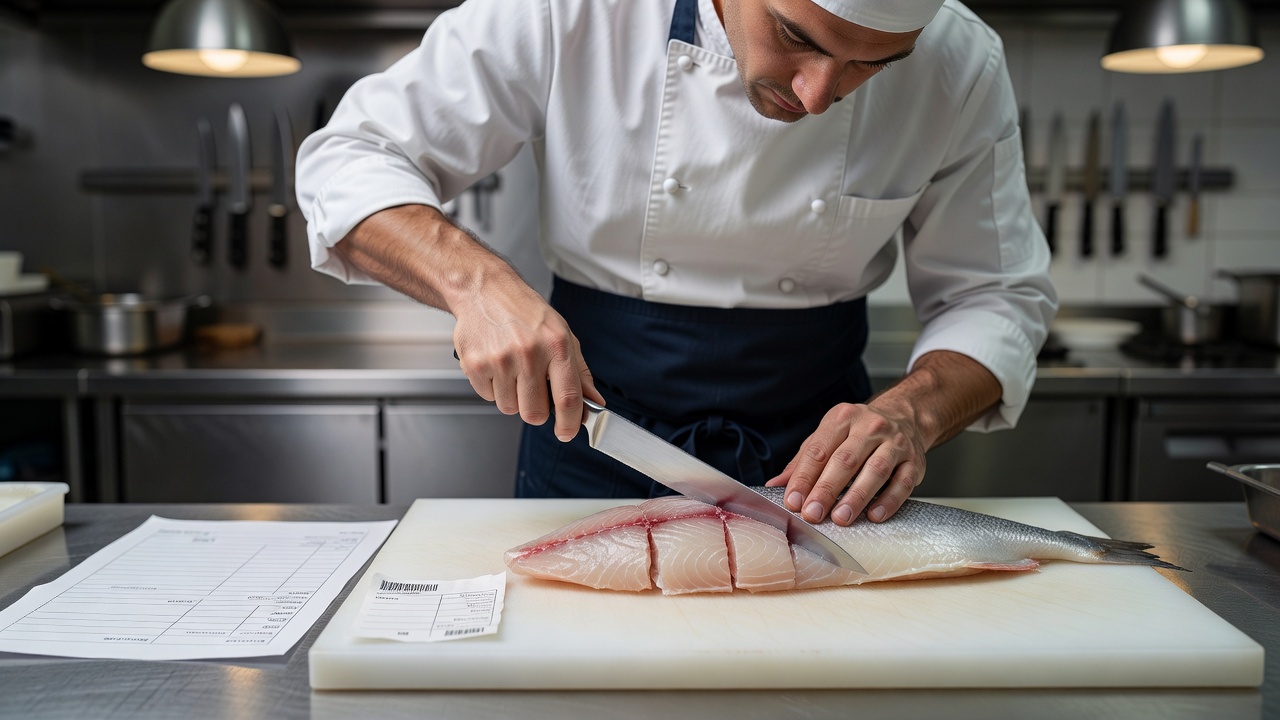
Choose substitutions for evidence and function
A responsible substitution has at least two tests. First, can you support the sourcing decision with relevant information about the replacement? Second, will it work safely and well in the intended dish? Texture, thickness, fat content and bones affect preparation. A fish that works in a quick pan cook may behave differently in a stew or a chilled preparation.
Do not use “underused” as a permanent environmental endorsement. Increased demand can change pressure on a fishery, and a less familiar species can still come from a poorly understood or vulnerable stock. Use current, specific guidance and communicate the actual replacement to diners. A flexible menu is useful only when its flexibility does not hide what is being served.
Before changing the dish
- Product
- Confirm species and supplier lot
- Evidence
- Recheck area, method and any assurance claim
- Preparation
- Review yield, bones, storage and cooking needs
- Communication
- Update menu wording and staff information
Reduce waste without inventing a benefit
Using suitable frames for stock or planning portions around available cuts can improve utilisation. Yet whole-fish purchasing is not always the least wasteful option for every kitchen. Skill, demand, storage capacity and realistic use for trim all matter. A specialist processor may achieve better yields than an operation that buys whole fish but discards much of it.
Measure what happens in your own system. Separate avoidable spoilage, preparation losses and plate waste so that a solution addresses the right cause. Smaller orders may reduce spoilage but increase delivery frequency; larger batches may help purchasing but overload storage. Explain these trade-offs rather than reducing them to a single “zero-waste” slogan.
A good menu claim should still be true after the delivery changes.
Make service language match the record
Use specific wording that the team can support. If the record identifies a catch area, name that area accurately rather than substituting a more appealing port. If a preparation mixes batches from different origins, do not tell a single-origin story. If a scheme claim is used, check applicable chain-of-custody and trademark requirements before printing it.
For home cooks, the same principle can be simpler: keep the label or receipt until the food has been used, follow storage instructions and ask about preparation before buying an unfamiliar product. Do not rely on smell alone to establish safety, and do not assume that freezing resolves every risk. Raw or lightly cooked seafood requires specific risk controls and is not suitable for every person or product.
Good cooking makes a sourcing decision usable. Good records make it explainable. Neither substitutes for the other, but together they let a meal carry a more accurate story from counter to table.